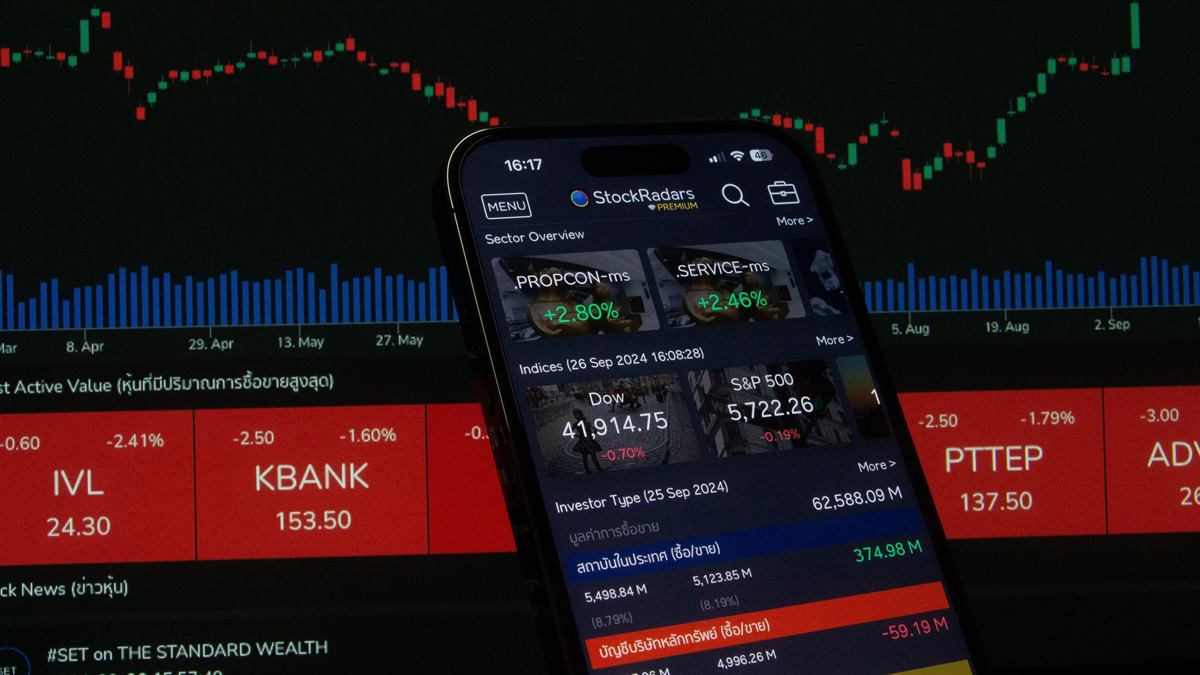

At the moment I am writing this article, the wealthiest man in Africa, Aliko Dangote, has launched an Initial Public Offering (IPO) for "Dangote Petroleum & Petrochemicals," one of the biggest oil refineries in Africa. An IPO, in finance, is a process whereby a private company opens up its capital to external investors, usually through the stock market. Investors can thus buy shares of the company's stock, thereby becoming shareholders with voting rights, dividends and access to information linked to the company.
The stock market is not a new concept. Its origins trace back to the 17th century in the Netherlands and Belgium, where the first stock markets were established, trading commodities such as minerals and farm products. It gradually expanded worldwide, became popularized by first-world countries like the US and UK, and eventually reached Africa in the late 20th century.
Most stock markets in Africa are still young and suffer from low liquidity and transaction volume, with very few companies listed. Several reasons explain this: lack of financial education, low income levels, limited institutional transparency, and strict regulatory requirements, just to name a few.
Coming back to Dangote's IPO, widely described in the press as "Africa's largest bank-backed Dangote refinery IPO," the offer aims to fund the construction of one of the largest oil refineries in Africa, capable of producing up to 650,000 barrels daily. The offer comprises 4.1 billion ordinary shares priced at ₦525 ($0.40) per share, and is widely regarded by public opinion as a strategic investment opportunity.
The real questions are: is the opportunity actually profitable, what are the risks linked to it, and, more importantly for this article, how can Africans, especially non-Nigerians, access this opportunity?
How can a non-Nigerian invest in Dangote's IPO?
For a Nigerian resident, the process is relatively straightforward. The investor can subscribe through one of the approved receiving agents, provide the required identification and banking information, and complete the subscription process. The minimum application is 10 shares, meaning that at ₦525 per share, an investor can theoretically participate with as little as ₦5,250 (about $4).
However, things become more complicated when the investor is Cameroonian, Ghanaian, Ivorian, or from any other African country outside Nigeria.
The Nigerian capital market is built around several institutions. The Nigerian Exchange (NGX) is where the shares will eventually trade, while the Central Securities Clearing System (CSCS) is responsible for clearing, settlement, and the electronic record of securities. An investor normally accesses the CSCS infrastructure through a stockbroker, and CSCS itself states that an investor needs to open an account with a stockbroking firm before opening a CSCS account.
For a Nigerian resident, this infrastructure is almost invisible. For a foreign investor, it can become a serious barrier.
A traditional route would require the investor to find a Nigerian stockbroker willing to onboard foreign clients, complete the necessary KYC procedures, provide identification and proof of address, arrange the appropriate banking and foreign exchange channels, and ensure that the capital entering Nigeria is properly documented.
This is where the concept of a Certificate of Capital Importation becomes important. Under Nigerian capital market rules, foreign capital invested in Nigerian securities must enter through an authorised dealer and obtain this certificate. It matters because it creates the legal trail needed for an investor to later repatriate capital, capital gains, dividends, and interest through the official banking system.
Therefore, the ₦5,250 minimum subscription can be slightly misleading when viewed from the perspective of a young African investor. The share itself may cost only around $0.40, but the infrastructure required to buy, hold, and eventually sell that share is considerably more complicated.
The fintech solution
This is where companies such as Daba Finance are attempting to solve one of the biggest problems facing African capital markets: accessibility.
Daba allows eligible investors outside Nigeria to access Nigerian securities through its Nigerian market channel, which operates in partnership with a licensed Nigerian securities broker. According to Daba, international investors can participate without independently opening a Nigerian bank account or obtaining a BVN, since the platform and its local partners handle the relevant market infrastructure.
On the surface, this is exactly what African capital markets need. A young Cameroonian should not necessarily have to understand the entire Nigerian securities settlement system before being able to buy shares in a Nigerian company. Fintech companies can act as the bridge between the investor and the financial infrastructure.
However, this convenience raises another question: how much trust should an investor place in an intermediary? The fact that an app has a beautiful interface does not automatically mean the investor owns the securities directly. An investor should understand who the regulated broker is, where the securities are actually held, how transactions are settled, what happens if the fintech stops operating, and how the money can eventually be withdrawn.
This is particularly important in African markets, since the Securities and Exchange Commission of Nigeria has repeatedly warned investors about fraudulent and unregistered investment platforms. In June 2026, the SEC even issued a cease-and-desist directive concerning fraudulent pre-marketing activities surrounding the Dangote IPO, before the offer had even received regulatory approval.
The SEC has therefore advised investors to use only officially approved channels and to verify the authenticity of investment platforms before transferring money or submitting personal information.
The lesson is simple: fintech can reduce the friction of investing, but it does not eliminate investment risk.
The currency problem
There is another problem that is often overlooked when an African investor buys shares in another African country: currency.
Imagine a Cameroonian investor who converts CFA francs into Nigerian naira to purchase Dangote shares. Even if the share price increases, the investor can still lose money when converting the investment back into CFA francs if the naira depreciates significantly in the meantime.
The investor is therefore exposed to at least two risks: company risk and currency risk.
If the Dangote share increases by 20% but the naira loses 25% of its value against the investor's home currency, the actual return in CFA francs could turn out negative.
This is particularly relevant because the Dangote IPO is priced in naira, while many African investors will ultimately measure their wealth in another currency.
The same problem applies to dividends. Suppose Dangote eventually declares a dividend of ₦20 per share. A foreign investor may receive that dividend in naira, but the money may eventually need to be converted into dollars, euros, or CFA francs.
The investor therefore has to think about exchange rates, banking charges, applicable taxes, documentation, and the mechanisms available for repatriating the money.
This is one of the reasons why the Certificate of Capital Importation and proper documentation of foreign investment matter so much. Nigerian rules provide a framework allowing foreign investors to repatriate capital, capital gains, dividends, and interest through authorised dealers, subject to applicable requirements and taxes.
Buying the share is therefore only one part of the investment process. Getting your money back is another.
But is Dangote Refinery actually profitable?
This is where investors need to separate the story from the numbers.
The Dangote refinery was not a small project. It reportedly took around 10 years to build and cost close to $20 billion. It began operations in 2024 and has been ramping up production ever since.
A refinery of this size does not become profitable simply because it starts producing oil products. There are enormous costs involved: construction financing, debt servicing, crude oil purchases, transportation, maintenance, energy, storage, personnel, and distribution.
There is also the question of refining margins. A refinery buys crude oil and sells refined products such as petrol, diesel, and aviation fuel, and its profitability depends partly on the gap between the cost of crude and the prices it can obtain for these refined products. This means that even a refinery producing hundreds of thousands of barrels a day can go through periods of weak profitability if refining margins collapse.
Dangote's recent numbers nevertheless show why investors are paying attention. According to Reuters, the refinery reported revenue of more than $13 billion and a net profit of $1.82 billion in the first half of 2026, compared with a $476 million loss in 2025.
But this does not mean an investor should immediately conclude that the IPO is a good investment.
The refinery's recent profitability has also benefited from exceptional conditions in international energy markets. Reuters reported that disruptions in global fuel supply helped increase demand for Dangote's refined products, particularly diesel and jet fuel.
This raises an important question for fundamental analysis: are these profits sustainable? A refinery can be highly profitable today and far less profitable tomorrow. Crude prices can change, refining margins can fall, government regulations can shift, fuel prices can move, competition can increase, maintenance can temporarily reduce production, and currency movements can affect both costs and revenues.
The company is also planning a major expansion toward approximately 1.4 million barrels per day, which means investors are not simply buying the refinery as it exists today. They are also, indirectly, buying expectations about what the company can become in the future.
This is why investors should not simply look at the name Dangote and assume the investment will automatically be profitable.
How long does a refinery take to become profitable?
There is no universal answer.
The time required for a refinery to recover its construction costs depends on the initial investment, production capacity, debt structure, refining margins, crude supply, product prices, taxes, and operating efficiency.
Large refineries can therefore take several years before investors recover the capital originally invested in the project. The Dangote case illustrates this well: the refinery required roughly a decade of construction and billions of dollars of capital before reaching its current operating scale, and it still recorded a significant loss in 2025 before reporting a substantial profit in the first half of 2026.
This is why investors should look beyond a single year's profit. A proper fundamental analysis should examine revenue growth, EBITDA, net profit, free cash flow, debt, interest expenses, production volumes, refining margins, valuation, and the company's future capital expenditure.
The question should not simply be "is Dangote making money?" It should be: at the current IPO valuation, are the company's future profits sufficient to justify the price being paid today? This distinction is fundamental in investing.
The bigger problem: can African youths even access the financial system?
Before asking whether a young African should invest in the stock market, perhaps we should ask a simpler question: can he even open the necessary financial accounts?
This is one of the less visible barriers to investment.
In developed financial markets, opening a brokerage account can sometimes be done almost entirely online. An investor can provide identification, complete KYC, connect a bank account, and start investing without ever physically visiting a financial institution.
African countries have made considerable progress, especially through mobile money and fintech, but access remains uneven.
The World Bank's 2025 Global Findex data shows that only 21% of adults in Cameroon had an account at a bank or similar financial institution in 2024, while 55.1% had a mobile money account. Overall account ownership stood at 60.9%, which highlights an important distinction between having access to digital money and having access to traditional investment infrastructure.
A young Cameroonian can therefore have MTN Mobile Money or Orange Money and still have no practical way of buying a share listed on BVMAC, NGX, or the NYSE.
This is an important contradiction. Africa has managed to leapfrog parts of traditional banking infrastructure through mobile money, but that same level of innovation has not yet fully translated into capital market access.
There are also practical obstacles: internet connectivity, smartphone ownership, digital literacy, KYC documentation, bank charges, minimum balances, limited investment platforms, and the geographical concentration of financial institutions.
For someone living in a major European or American city, buying a financial asset can be a five-minute operation on a smartphone. For a young person in Africa, the first challenge may still be opening the bank account needed to fund the investment account.
This is not simply a technological problem. It is an infrastructure problem.
African stock markets versus developed markets
The difference becomes even clearer when comparing the investment experience.
In the United States, an investor can open an account with a brokerage firm, deposit a relatively small amount of money, and gain access to thousands of stocks, bonds, ETFs, and other financial instruments. Fractional share investing has also made it possible to buy a fraction of expensive securities rather than a whole share.
In Africa, access is improving, but markets remain more fragmented. An investor may need one intermediary for one country and a different intermediary, with different documentation, for another.
There are also fewer listed companies, lower trading volumes in many markets, and less research coverage.
This creates a vicious cycle: low participation leads to low liquidity, which leads to a less attractive market, which in turn leads back to low participation.
Breaking this cycle requires more than simply telling young Africans to invest.
Do not follow the crowd
The Dangote IPO is likely to generate enormous attention, and that attention can itself become a risk.
An investor can see thousands of people discussing Dangote on social media and automatically assume that buying the shares is the right decision. But popularity is not fundamental analysis.
An IPO investor should study the prospectus, financial statements, valuation, debt, business model, industry conditions, risks, and expected future cash flows before committing any money.
The fact that Aliko Dangote is one of Africa's wealthiest businessmen does not guarantee that the stock price will rise. The fact that the refinery is one of Africa's largest does not guarantee that its valuation is attractive. And the fact that thousands of people are subscribing does not, on its own, constitute an investment thesis.
The market can remain irrational for longer than an individual investor can remain solvent. Investors should therefore avoid treating the Dangote IPO as a lottery ticket.
What can be done?
If African capital markets are going to attract a new generation of investors, accessibility needs to improve at several levels.
First, stock exchanges and brokerage firms need stronger partnerships with fintech companies. A young investor should be able to move from a bank or mobile money account to a regulated investment account without navigating several disconnected institutions.
Second, governments and regulators need to encourage cross-border investment infrastructure. Africa has created the African Continental Free Trade Area, but financial markets remain heavily fragmented along national borders. A more integrated capital market would make it easier for an investor in Cameroon to access Nigeria, an investor in Nigeria to access Kenya, and an investor in Ghana to access South Africa.
Third, fintech companies need to focus on trust as much as convenience. The goal should not simply be to build an attractive app. Investors should clearly know who holds their securities, which institution is regulated, what happens to their money if the platform fails, and how they can recover their assets.
Fourth, information needs to become more accessible. A young investor should not need to be a professional financial analyst to find a company's financial statements, share price history, dividend history, ownership structure, and major risks. More financial information in accessible formats would reduce the information gap between institutional and retail investors.
Finally, African exchanges need to improve liquidity and market transparency. More listed companies, more investors, better market-making mechanisms, and stronger disclosure standards could all help create a more attractive environment for retail participation.
Conclusion
The Dangote IPO is therefore bigger than just another share offering. It provides a useful demonstration of both the potential and the problems of African capital markets.
On one hand, a young investor can theoretically become a shareholder in one of Africa's largest industrial projects with as little as ₦5,250. On the other hand, that same investor still has to deal with brokerage infrastructure, KYC, custody, currency fluctuations, cross-border regulation, dividend repatriation, liquidity, and information asymmetry.
This is the paradox of African investing: the financial asset can be affordable while the financial infrastructure remains inaccessible.
Dangote's "People's IPO" can help bring millions of new investors closer to the stock market, but long-term participation will require more than one popular IPO. Africa needs capital markets where young people can easily open accounts, access reliable information, invest small amounts, diversify across countries, and confidently withdraw their money when needed.
Until then, the question should not only be whether African youths are willing to invest. We should also ask whether African financial markets are actually built to allow them to do so.
Comments (0)
No comments yet. Be the first!